
Reinstatement is an evidence state, not a policy exemption
For an enterprise media buying team, the phrase 3-Line Green Badge Reinstated Profile (Policy Appeal Cleared) should trigger a documentation review. What was restricted? Which decision was reviewed? Who controls the account? What does the current platform interface actually show? A commercial label can summarize a supplier's description, but it cannot establish an official account tier, a permanent exemption from review, or superior tolerance for deceptive advertising.
Meta's public guidance says advertisers may be able to request review when a business portfolio, ad account, Page, or user account is incorrectly restricted. That supports a legitimate appeals workflow. It does not establish that an appeal-cleared profile receives preferential treatment in subsequent policy decisions. Likewise, the public review guidance says an ad may not be reviewed against every policy before it begins receiving impressions. Initial delivery therefore cannot be treated as permanent policy clearance. [S1][S2]
The commercially useful question is narrower: does a documented recovery history improve the buyer's understanding of the asset, its authorized operation, and the remaining operational risks? Sometimes the record answers important questions. Sometimes it reveals unresolved dependencies. This article provides an original evaluation framework for that decision without inventing private enforcement scores, Q4 crawler thresholds, or immunity attached to a green interface element.
Separate six states that are routinely conflated
An identity check, a security recovery, an advertising appeal, business verification, a badge, and current delivery eligibility answer different questions. One person may successfully complete a selfie check while an associated business asset remains restricted. A paid invoice may confirm a financial event while providing no evidence about policy status. A profile that can sign in may still lack permission to manage the intended ad account.
Use precise catalog language. Identity KYC-Verified Profiles should identify the actual verification scope and evidence date. Biometric Selfie-Verified Profile (Identity Checkpoint Cleared) describes a completed identity step only where documented. Security Checkpoint Cleared (Email OTP Unlocked Profile) describes an access-recovery event. Reinstated Advertising Profiles describes an appeal outcome only to the extent supported by the relevant notice. None of these descriptions should imply transferability, blanket advertising eligibility, or permission to impersonate the verified person.
| Evidence state | What it can support | What it cannot establish |
|---|---|---|
| Completed identity check | A specified verification event occurred | Ownership transfer or future advertising approval |
| Security recovery completed | Access was restored at a recorded time | Removal of every business restriction |
| Advertising appeal cleared | A specified decision was reversed or resolved | Permanent tolerance for new policy violations |
| Current delivery observed | Certain campaigns delivered during a window | Guaranteed future spend or profitable acquisition |
| Invoice settled | A particular financial obligation was paid | Authenticity of every associated asset |
| Interface badge displayed | That interface state was observed | An unpublished privileged enforcement tier |
The distinction also prevents confusion with separate platform verification products. Meta announced a selfie-based Facebook Verified badge in July 2026. That announcement concerns confirmation that a real person is behind a profile. It is not evidence that the marketplace phrase in this article is an official advertising status or that identity verification changes advertising rules. Verify each claim against its own source and account record. [S3]
Build an appeal evidence packet that survives scrutiny
Start with a stable asset identifier, the affected business relationship, and the authorized owner. Preserve the restriction notice, the stated reason, the submission date, and the final response. Record which person submitted the appeal and under what authority. If the response is ambiguous, retain that ambiguity. Do not convert a generic acknowledgment or a reopened support case into a claim that the account is fully reinstated.
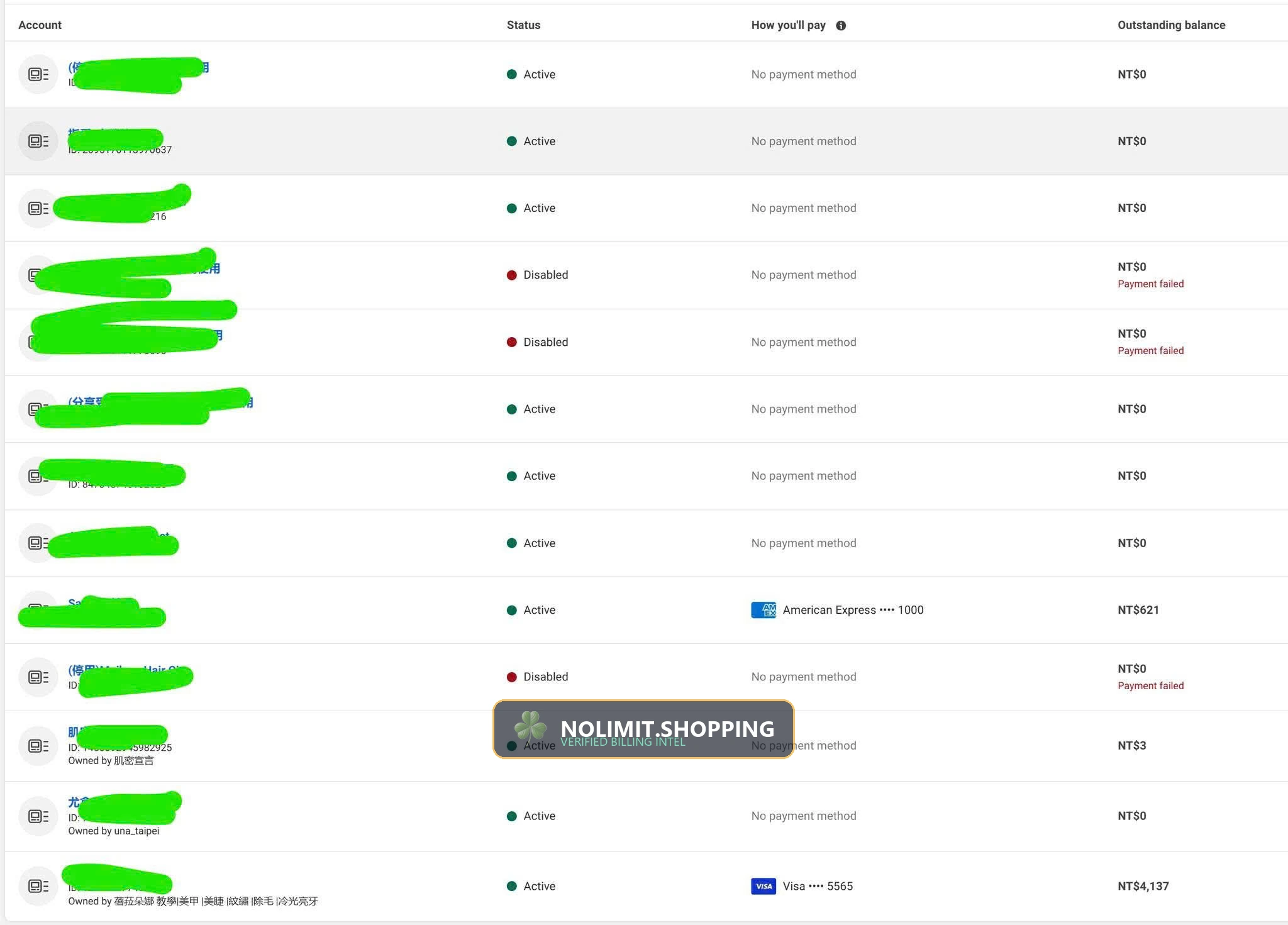
Next, capture current status from the live official interface with the owner's permission. Include the timestamp and the specific scope shown. Screenshots should be tied to an internal evidence reference, but sensitive identifiers can be masked in public material. The reviewer needs enough context to connect the screenshot to the relevant record. A tightly cropped green label without scope, date, or provenance is weak evidence even if the image itself is genuine.
Maintain a change log from the recovery date forward. Record role changes, billing changes, new domains, major campaign launches, and subsequent enforcement events. This log supports diagnosis when a later problem occurs. It should not become a speculative map of secret platform detection signals. Its purpose is to establish what the organization actually changed and who approved it, so that the appeal history remains interpretable months later.
Why the superiority claim requires a real study
Suppose an agency observes twenty restrictions among two hundred ordinary eligible accounts and eight restrictions among two hundred appeal-cleared accounts over the same thirty-day window. The raw rates are 10% and 4%, giving a risk ratio of 0.4 and an absolute difference of six percentage points. These invented numbers illustrate study design; they are not observations about Meta or any NoLimit Shopping product.
Under a simple independent-binomial approximation, the standard error of the difference is sqrt(0.10 × 0.90 / 200 + 0.04 × 0.96 / 200), approximately 0.0253. A rough 95% interval for the six-point difference is about 1.0 to 11.0 percentage points. Even that apparently favorable result would not establish causation. The groups might differ in advertiser category, geography, content quality, spend, owner behavior, or eligibility selection.
Selection bias is especially important after an appeal. Accounts that complete an appeal may have more attentive operators, clearer records, or more correctable underlying problems. Failed appeals may disappear from the supplier's dataset. A comparison limited to successfully recovered survivors overstates the usefulness of buying into the process if it excludes all attempted recoveries and their costs. Define the population before inspecting outcomes.
The correct empirical claim would specify the cohort, observation dates, inclusion criteria, exposure, uncertainty, and limitations. It might say that a documented cohort had a lower observed restriction rate under a particular operating policy. It should not say that reinstatement creates superior tolerance against deceptive content. Evidence of an operational association and a theory about hidden platform privileges are different propositions.
Normalize risk by exposure and account for censoring
Account count alone is a poor denominator when one cohort runs for five days and another runs for a month. Track eligible account-days, active advertising days, spend, and the time until the first relevant event. An account paused for the whole measurement window contributes little evidence about delivery continuity. An account still active at the end of the study has an incomplete future history rather than proof of permanent survival.
For example, six events over six thousand eligible account-days represent one event per thousand account-days. Ten events over twenty thousand account-days represent half an event per thousand account-days. The second group has more total events but a lower exposure-normalized rate. Report both the count and the denominator. When repeat events occur, distinguish the first-event endpoint from the recurring-event burden on the operations team.
A mature analysis can use time-to-event methods and adjustment for measured confounders, but its interpretation remains limited by unmeasured differences. Shared owners, campaigns, and business dependencies also invalidate the assumption that every account is independent. Group-level uncertainty should reflect those relationships. Never treat a hundred assets operated by one team as a hundred fully independent experiments when the same content release affects all of them.
Q4 crawler claims need evidence, not seasonal mythology
There is no verified public evidence in the sources reviewed here for a special Q4 deceptive-link crawler rule that grants appeal-cleared profiles superior tolerance. Seasonal commercial pressure is a reason to tighten release management, not an excuse to invent private policy architecture. If a team observes more rejections during a period, separate changes in its own launch volume and offer mix from changes in platform behavior before drawing a conclusion.
The practical defense is consistency between the advertisement, the destination, and the actual offer. The same substantive claims, pricing, eligibility terms, and purchase conditions should remain available to customers and platform reviewers. A destination should not present materially different commercial content based on whether the visitor appears to be a reviewer. Meta's public standards prohibit deceptive or misleading commercial practices. [S4]
Create a release checklist covering destination availability, mobile layout, offer accuracy, contact details, checkout totals, consent choices, and redirects used for legitimate navigation. Verify the complete purchase path in each intended market. A technically accessible page can still be commercially misleading if its recurring charges or eligibility conditions are hidden. Conversely, a compliant offer can still fail technically because an expired certificate or broken destination prevents review.
Measure destination integrity as an engineering property
Represent each approved destination release with a version identifier and a review record. Store a digest of the approved source artifact and a separate timestamped capture of the rendered commercial terms. Dynamic content means byte-for-byte equality is not always the right test: language localization, stock availability, and personal carts can vary legitimately. The important invariant is that the advertised offer and material terms remain accurate across supported contexts.
Test the same public destination under ordinary desktop and mobile conditions, supported languages, and consent states. The test should check availability and consistent substance, not classify platform reviewers. Record HTTP status, navigation failures, missing disclosures, and mismatches between the advertised claim and checkout. This creates evidence useful for both quality assurance and an appeal if an otherwise legitimate destination is misunderstood.
type ReleaseCheck = {
  releaseId: string;
  ownerApproved: boolean;
  offerReviewed: boolean;
  destinationReachable: boolean;
  checkoutTermsMatch: boolean;
  openRestriction: boolean;
};
function mayLaunch(x: ReleaseCheck): boolean {
  return x.ownerApproved && x.offerReviewed && x.destinationReachable &&
    x.checkoutTermsMatch && !x.openRestriction;
}
// Internal release gate; it does not predict platform approval.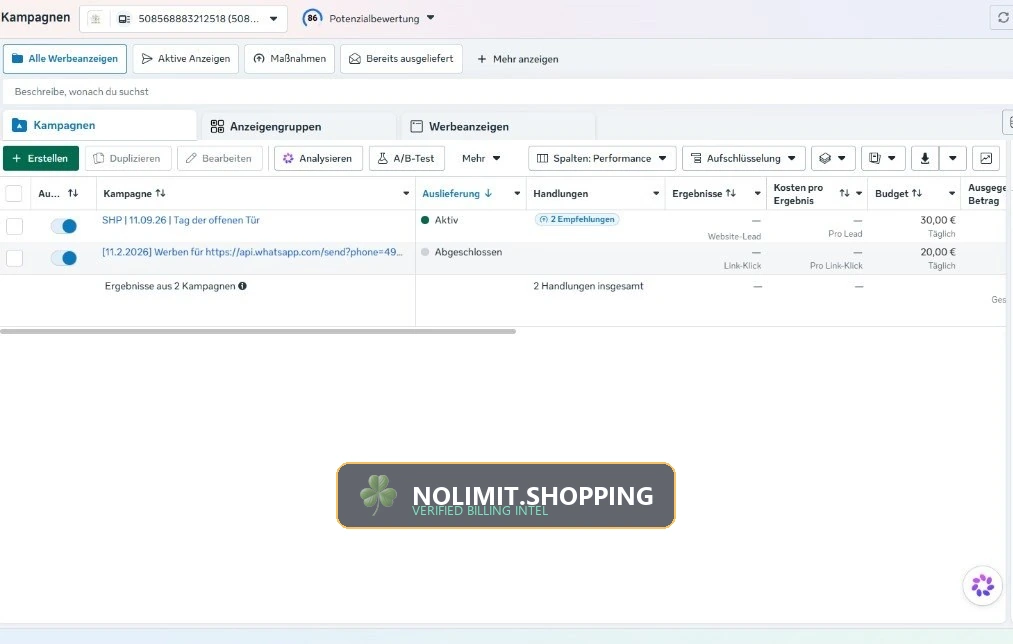
This proposed NoLimit Pro Tools Suite check deliberately avoids a fabricated policy score. Boolean readiness controls can establish whether the agency completed its own review, not whether Meta will approve the next impression. Production use should retain the reviewer, evidence reference, and expiry of each approval. A missing or expired record should produce a visible exception rather than an optimistic default.
Separate CPM volatility from account-state storytelling
An appeal-cleared account that performs well during one week does not establish that the appeal caused the result. Audience composition, creative fatigue, bidding, conversion measurement, and demand can all change at the same time. Compare cohorts on matched campaign objectives and time windows, and report spend-weighted aggregate measures carefully. Averages of account-level CPMs can mislead when the accounts deliver very different impression volumes.
Suppose one account spends $1,000 for one hundred thousand impressions and another spends $9,000 for three hundred thousand impressions. Their CPMs are $10 and $30. The simple average is $20, but the combined CPM is $10,000 / four hundred thousand × 1,000 = $25. The combined measure answers what the portfolio actually paid. Neither figure, on its own, explains the causal role of an account's appeal history.
For a volatility example, consider daily CPMs of $16, $18, $20, $22, and $24. The mean is $20. The sample standard deviation is sqrt(40 / 4), approximately $3.16, and the sample coefficient of variation is 15.81%. Label whether a calculation uses sample or population standard deviation. Five observations are insufficient to establish a stable seasonal distribution, but they make the arithmetic reproducible.
Use such measures to size commercial stress scenarios. At a fixed daily budget, higher CPM reduces impressions. Whether conversions fall proportionally depends on CTR, CVR, and the changing audience mix. Do not take a screenshot of a low-CPM day and call it evidence of policy tolerance. Performance evidence, billing evidence, identity evidence, and appeal evidence should remain distinct even when they appear in the same customer case study.
Price procurement against expected operating cost
An asset's headline price is only one part of the decision. Define a planning cost as acquisition or onboarding expense plus review labor, expected downtime contribution loss, recovery labor, and unresolved contractual exposure. Use measured historical inputs wherever available. If there is no credible estimate for a risk, present a range and identify the missing evidence rather than substitute a confident number.
For a hypothetical authorized onboarding choice costing $300, requiring $120 of review labor, and carrying an estimated $200 of expected interruption and recovery cost, the planning total is $620. A second choice costing $450 with $60 of review labor and $80 of expected interruption cost totals $590. The more expensive initial option can have a lower expected operating cost, but that conclusion depends entirely on the quality of the estimates.
Supplier warranties belong in a separate contractual analysis. Determine the covered event, evidence required, claim window, exclusions, settlement method, and counterparty responsibility. A commercial replacement or refund policy cannot compel a platform to approve an account. Avoid valuing a promise at its full headline amount unless the buyer can realistically satisfy its conditions and has credible evidence that eligible claims are resolved.
Run a controlled return to service
After a legitimate appeal succeeds, review the underlying reason, confirm the permitted account scope, and validate current roles and billing. Resume only eligible campaigns whose claims and destinations have passed internal review. Define a business-driven budget envelope and observation window, then monitor delivery, payments, complaints, and new notices. Do not invent a universal warming schedule or suggest that a particular pace makes prohibited content acceptable.
If a fresh restriction appears, preserve the notice and relevant release history, pause affected changes, and use the official review process where available. The responsible owner should coordinate a single coherent evidence packet. Repeated submissions with contradictory explanations make internal diagnosis harder and can undermine the credibility of the case. The objective is a truthful explanation of the asset, the business, and the corrective action.
An enterprise handoff should contain the status record, owner authorization, current permissions, billing scope, last reviewed campaign release, and unresolved issues. A buyer should be able to understand the operating position without relying on an informal chat claim. This is where a well-documented reinstatement history can create real value: it improves decision quality and accountability without pretending that policy obligations disappear.
Questions buyers should ask before committing capital
Ask whether the commercial description is an official platform term or a supplier label. Ask which asset was reviewed, when the decision occurred, and whether the current status can be confirmed under authorized access. Ask what the supplier can prove about control and permitted use. If the answer depends on taking over another person's identity or assuming that identity checks are transferable, the proposed enterprise operating model is not sound.
For NoLimit Shopping listings, request current evidence and written terms from the Admin Desk at @markzuckerads. The NoLimit Shopping Proprietary Ledger can be specified to retain commercial evidence references and order events; it cannot certify an undisclosed platform privilege. Treat any proposed NoLimit Shopping Proprietary ACID Engine controls as implementation requirements until their operation is demonstrated. Trust improves when the scope of every claim is explicit.
Preserve evidence quality in public case studies
A useful reinstatement case study begins with the business question and the observation window. Describe the legitimate campaign category, the account status being evaluated, the evidence available, and the limitations of the comparison. If the case covers one customer, say so. If a supplier selected it because the result was unusually favorable, it should not be presented as representative of every asset in the catalog. A transparent single case is more credible than an unsupported portfolio-wide assertion.
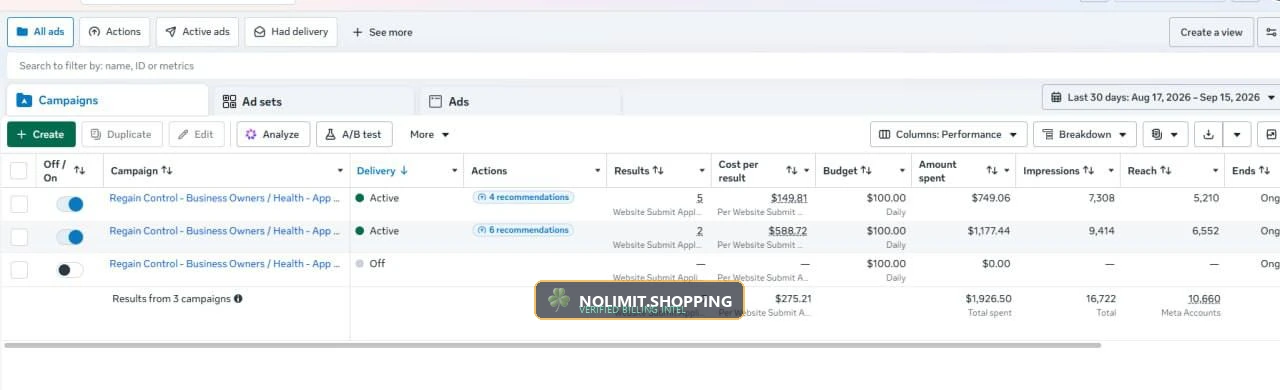
Create a claim-to-evidence register before publication. Each statement about payments should point to an invoice or statement reference. Each statement about current status should point to a dated official record. Each performance measure should specify its reporting window, attribution basis, and denominator. A single screenshot can support several observations, but its evidentiary scope should remain narrow. For example, a spend total does not establish profitability without the relevant revenue, cost, and attribution records.
Have someone outside the sales workflow review the final captions. Ask whether a reader could reasonably infer a guarantee that the evidence does not support. Remove language suggesting that an appeal-cleared asset can absorb prohibited claims, evade review, or provide a privileged route into an auction. Also remove wording that implies a platform partnership or endorsement unless that exact relationship is documented and authorized for publication.
Maintain a correction process after release. If a source changes, a status becomes stale, or a calculation is found to be wrong, update the affected claim and preserve an internal revision record. Do not silently replace an unsuccessful case with a successful one while leaving the original performance claim unchanged. The objective of enterprise content is to support a purchasing decision that still makes sense after a finance director or security reviewer asks for the underlying evidence. That standard produces stronger long-term trust than an impressive label whose meaning changes whenever it is challenged.
Sources and evidence scope
- [S1: Meta — Request a review for a restricted advertising account](https://www.facebook.com/business/help/530209463124901). Public indexed summary reviewed September 23, 2026; full page required sign-in.
- [S2: Meta — About ads in review](https://www.facebook.com/business/help/204798856225114). Public indexed description of review scope; no permanent clearance inferred.
- [S3: Meta — Introducing Facebook Verified](https://about.fb.com/news/2026/07/introducing-facebook-verified/amp/). Separate identity-badge announcement, July 2026.
- [S4: Meta — Unacceptable business practices](https://transparency.meta.com/policies/ad-standards/fraud-scams/unacceptable-business-practices/). Public indexed policy description; checked September 23, 2026.