
Managing one hundred assets is an authorization problem first
An agency managing more than one hundred social and advertising assets needs a reliable answer to four questions: who owns each asset, who may operate it, which device and session are being used, and how access can be revoked. Browser settings matter, but they cannot replace legitimate authority. The operating objective is secure, attributable work under supported platform access, with enough separation to prevent client mix-ups and enough central control to respond to an incident.
A browser profile is a local organizational container, not proof of a separate human identity or a hidden platform permission. A session token is a credential, not a convenient handoff file. An enterprise process should not rely on exporting another person's authenticated session or changing device signals to evade account restrictions. Those practices make ownership, incident response, and recovery harder to defend precisely when the business needs clarity most.
Understand fingerprints without inventing a universal hardware identity
MDN describes browser fingerprinting as combining distinguishing browser and operating-system characteristics, including settings and display-related information. A fingerprint is therefore a derived observation, not necessarily one permanent hardware serial number. Canvas rendering and graphics capabilities can contribute observable characteristics, but the exact signals, weights, and decisions used by any advertising platform are not established by this article. A commercial tool's confidence score is not the platform's private risk score. [S1](https://developer.mozilla.org/en-US/docs/Glossary/Fingerprinting)
The useful enterprise response is to maintain supported software, understand approved device changes, and preserve truthful operator context. A browser or graphics update can alter observable behavior without indicating wrongdoing. Conversely, an apparently familiar environment does not prove that a session is safe. Security decisions should combine authenticated identity, authorization, device management, and actual account activity rather than rely on one stable-looking fingerprint.
Do not promise that normalizing or changing a Canvas or WebGL result makes an account unflagged. Such a claim would require evidence about an undisclosed decision system and a defined observation period. For enterprise procurement, ask what the product actually controls, what data it collects, and how it protects credentials. Features that organize legitimate work are useful; unsupported immunity claims are not a security architecture.
Distinguish local separation from the platform's business graph
Separate browser workspaces can reduce accidental cross-client actions, such as opening the wrong reporting view or submitting a change under the wrong operator context. They do not erase shared business ownership, partner access, or billing responsibility. Keep those relationships explicit. An agency should not interpret a separate local workspace as permission to conceal that two assets belong to the same business or are operated by the same authorized team.
For one hundred assets, begin with a registry containing owner, platform, asset identifier, authorized business relationship, assigned operators, financial responsibility, and recovery contact. Add a link to the current permission evidence. The registry should identify business assets, not stockpile personal identities. If several assets legitimately belong to one client, represent that grouping instead of manufacturing artificial ownership boundaries.
Assign local workspaces to genuine operational scopes, such as a client or a supported role. Label the current client prominently and require confirmation for high-impact changes. The interface should make it difficult to mistake a reporting-only context for a billing-administration context. This is a human-factors control: it reduces avoidable mistakes without pretending to change the platform's view of who owns or operates the assets.
Treat an authenticated session as a powerful secret
OWASP's session-management guidance explains that an established session token can stand in for the authentication that created it. Possession may therefore grant substantial access without repeating the original sign-in ceremony. Session material should be protected like a credential and excluded from ordinary chat, shared spreadsheets, support attachments, and reusable onboarding packages. Copying a session undermines the attribution and revocation model on which the agency depends. [S2](https://cheatsheetseries.owasp.org/cheatsheets/Session_Management_Cheat_Sheet.html)
Strong sign-in protection remains valuable, but it does not make an already compromised endpoint harmless. If malicious software can act within an authenticated browser, a successful earlier sign-in does not prevent every subsequent action. Keep endpoint security, least privilege, and activity review in the control set. An enterprise incident process needs to address both stolen credentials and misuse of an existing authenticated context.
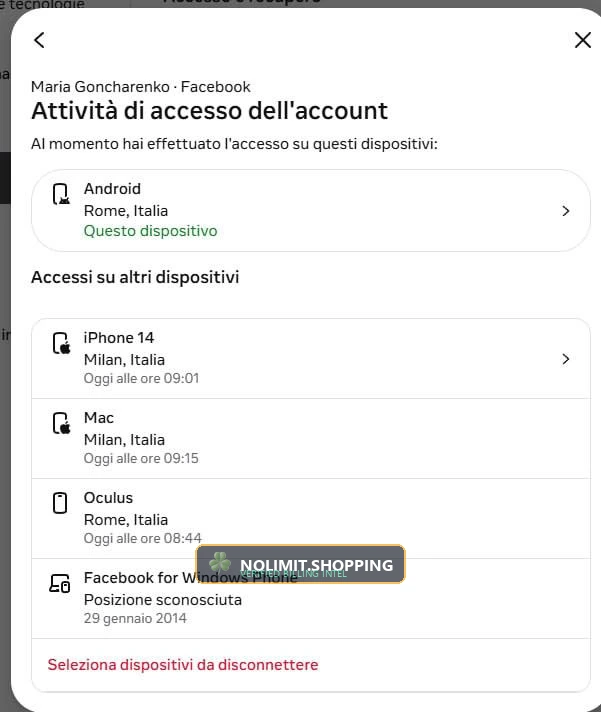
A supplier or contractor should receive access through the platform's supported delegation mechanism, with named responsibility and a documented scope. When a person leaves the engagement, revoke their access and review related sessions and integrations through official controls. Do not preserve business continuity by passing their authenticated browser state to the next employee. Continuity should come from legitimate business administration and recovery arrangements.
Build the role matrix around actions, not seniority
Define reporting, campaign editing, finance administration, and business administration as separate capabilities. A senior buyer may need broad campaign visibility without the ability to alter payment methods. A finance specialist may need invoices and funding controls without creative publishing rights. Role design should follow the work and the client's authorization, not a habit of giving everyone the broadest available permission.
TikTok publishes Business Center roles and finance-related permissions, and Meta provides business-asset partner access and two-factor authentication guidance. Use the supported control model for each platform and confirm the actual resulting access. An internal role name does not guarantee that the external platform grant matches it. Review the effective permissions, including inherited access and partner relationships, rather than relying only on the agency's own directory labels. [S3](https://ads.tiktok.com/resources/help/article/about-business-center-roles-and-permissions)[S4](https://www.facebook.com/business/help/865384580786591)
| Role | Typical legitimate need | Extra control for high-impact actions |
|---|---|---|
| Analyst | Read permitted performance records | Scoped exports and client identifiers |
| Buyer | Edit approved campaigns | Budget mandate and change record |
| Finance operator | Reconcile and manage authorized payments | Separate approval for material funding changes |
| Business administrator | Grant or revoke supported access | Independent review and recorded reason |
| Incident coordinator | Coordinate containment and evidence | Time-limited emergency scope |
A small team may combine roles, but the concentration should be visible. Use a second-person review for new administrators, broad partner grants, and major payment changes where the business can support it. Emergency access should be time-limited and reviewed after use. An unrestricted permanent exception created during one incident often becomes the weakest part of the next incident's response.
Quantify privilege concentration
Suppose a single administrator can modify all one hundred assets. Another design gives ten buyers ordinary editing access to ten assets each while reserving broad administration for a small controlled group. The second design can reduce the scope of a buyer-level mistake or compromise, but the broad administrators remain common dependencies. Counting local workspaces alone would miss that exposure.
Define credential exposure as the sum of approved daily budgets reachable through that credential's relevant permissions, counting each asset once. If a buyer can edit ten assets with $200 daily budgets, the nominal daily budget exposure is $2,000. If a broad administrator reaches the entire portfolio at the same budgets, it is $20,000. This is an inventory metric, not a maximum-loss guarantee: permissions may allow changes that alter future spending or create other harm.
Track the largest exposure, the distribution across roles, and the age of the last review. A reduction in average exposure can hide one dangerously broad dormant account. Remove obsolete grants and verify that deactivated people no longer retain external access. The best time to find a forgotten administrator is during a scheduled review, when the organization can act calmly and preserve evidence.
Use supported strong authentication and recoverable ownership
Prefer phishing-resistant authentication where the relevant service supports it, with documented recovery procedures and securely managed backup options. CISA recommends moving toward phishing-resistant methods such as FIDO-based authentication. The agency should verify availability for each actual account and train users on the legitimate sign-in route. Do not assume that every platform, role, or regional workflow offers identical options. [S5](https://www.cisa.gov/MFA)
Recovery deserves the same attention as enrollment. Identify the real account owner, authorized business administrators, and official support route before a device is lost. Keep business contact information current through supported procedures. A recovery plan should not depend on one former employee's personal phone or on sensitive identity material stored in an ungoverned folder. Historical verification and current authorization remain separate facts.
Test the internal response process with fictional case records and approved exercises. Confirm that staff know whom to contact and what information may be shared. Do not test recovery by impersonating another user or submitting fabricated evidence to a live platform. A rehearsal can validate staffing and documentation without creating an unauthorized account event.
Manage devices and browser changes as ordinary production changes
Maintain an approved browser baseline, timely security updates, disk protection, and a reviewed extension set on agency-managed devices. Extensions deserve scrutiny because they can have broad access to browsing data or page content. Remove tools that are unnecessary for the authorized work. A productivity benefit should be weighed against the permissions requested and the sensitivity of the accounts operated in that browser.
Record planned major device or browser changes so that support can distinguish them from unexplained activity. Use the platform's normal sign-in and verification process after a legitimate change. Do not freeze insecure software merely to preserve a familiar fingerprint. Security maintenance and truthful account operation are more defensible than depending on an old environment whose apparent consistency hides an increasing vulnerability.
Keep client downloads and exported reports in controlled locations with clear retention and access. Local workspace separation is incomplete if every browser exports invoices into one broadly shared folder. The file-handling policy should cover screenshots, downloaded reports, temporary diagnostic records, and backups. A secure browser session can still produce an insecure artifact if the operator exports sensitive data without an appropriate destination.
Secure sessions in the internal portal you actually control
For a NoLimit Shopping internal portal, use server-managed sessions and a reviewed cookie configuration appropriate to the application. MDN explains that Secure limits cookie transmission to secure connections, HttpOnly prevents ordinary script access to the cookie, and SameSite restricts some cross-site transmission. These are useful controls, but SameSite is only part of a complete cross-site request-forgery defense, and HttpOnly does not stop every action malicious page code could perform. [S6](https://developer.mozilla.org/en-US/docs/Web/Security/Practical_implementation_guides/Cookies)[S7](https://developer.mozilla.org/en-US/docs/Web/Security/Authentication/Session_management)
A conceptual session-cookie policy can use a host-scoped secure cookie, an appropriate SameSite setting, and explicit expiration rules. The application must also enforce authorization on the server, rotate or invalidate sessions at relevant security events, and protect state-changing operations. These controls apply to a system the business develops; the agency cannot set another platform's session policy by changing a local browser preference.
The proposed NoLimit Shopping Proprietary Ledger should record session-related administrative actions using nonsecret references: actor, client scope, action, approval, time, and result. It should not store reusable session tokens in the audit log. The NoLimit Shopping Proprietary ACID Engine can be specified to commit an internal permission change and its audit record together. External permission revocation still needs a separately verified outcome.
Enforce current grants on every sensitive action
type Grant = {
  assetId: string;
  action: 'read' | 'edit' | 'billing';
  expiresAtMs: number;
};

function mayAct(grant: Grant, assetId: string, action: 'read' | 'edit' | 'billing', nowMs: number): boolean {
  return grant.assetId === assetId && grant.action === action && grant.expiresAtMs > nowMs;
}
// Session authorization and least-privilege boundary enforcement.
This reference function deliberately does not trust a browser-supplied assertion that the user is an administrator. Production code must authenticate the actor, retrieve current grants from a trusted source, validate tenant ownership, and apply any required second-person approval. It must also address a grant revoked between an initial page load and the actual operation. Displaying a button only to the right person is insufficient if the underlying endpoint accepts an unauthorized request.
Use immutable action identifiers and explicit outcomes for high-impact operations. A requested change, an internally approved change, and an externally confirmed change are different states. If an external call times out, preserve the uncertainty and check the supported status before repeating an action that could have side effects. The same discipline that prevents duplicate payments also improves access-administration reliability.
Evaluate anomaly alerts with base rates
A security signal can be useful without being a reliable verdict on its own. Suppose an illustrative population contains ten thousand sessions, fifty of which are genuinely compromised. An alert detects 90% of those and incorrectly flags 1% of the remaining sessions. It produces forty-five true positives and approximately 99.5 false positives. Only about 31.14% of flagged sessions are compromised under those assumptions.
That calculation does not describe any platform's detection system. It demonstrates the base-rate problem: even a seemingly small false-positive rate can dominate the alert queue when harmful activity is rare. Report precision, recall, investigation burden, and the operational consequences of a false alarm. A browser-characteristic change should not automatically become an accusation of fraud or a reason to disrupt every client account.
Use layered evidence and proportionate actions. A low-confidence anomaly may justify review or reauthentication in the internal portal. A confirmed unauthorized financial change may require immediate containment. Preserve the reasons and the investigator's decision. Do not collect increasingly invasive device information merely because more data might improve a score; each signal needs a defined purpose, access policy, and retention limit.
Plan for correlated incidents across the estate
If one hundred independent assets each had a hypothetical 0.2% probability of an operational incident in a period, the expected count would be 0.2 and the probability of at least one incident would be 1 − 0.998^100, approximately 18.14%. The independence assumption is often unrealistic. Shared administrators, device images, extensions, and permission errors can create common-cause events that affect many assets together.
A portfolio with several workspaces on one compromised device has not achieved independent security. Identify the common dependencies and test their containment procedures. A shared reporting integration may have extensive read access, while a central administrator may control broad changes. Differentiate those impact types. Exposure includes confidential data, unauthorized edits, financial changes, and lost access; no single budget metric captures every consequence.
Design the response around the affected authority. Revoke or restrict the compromised access through supported controls, preserve evidence, review recent changes, and coordinate with the legitimate owner. Do not spread potentially compromised session material to other machines in an attempt to keep operations running. Business continuity should come from separately authorized, healthy access and an approved incident decision.
Measure containment and recovery as separate intervals
Record discovery time, confirmation time, containment completion, financial reconciliation, and restored authorized operation. A device disconnected from the network does not prove that every external session or integration has been revoked. A password change does not automatically establish the disposition of all active sessions. Confirm the actual supported controls and resulting state for the affected platform and account.
For an illustrative $20,000 daily portfolio, a forty-five-minute delivery interruption under uniform pacing exposes $625 of planned media opportunity. At an assumed 20% marginal contribution and no later recovery, the modeled contribution loss is $125. If the incident also involved unauthorized spending, that amount is a separate item requiring investigation. Do not equate every interrupted minute with the entire media budget or treat speculative recovery as already received cash.
After containment, reconcile account changes, payment activity, and permission grants against the last approved records. Restore only what the owner has authorized and what the platform permits. The incident report should identify the root cause, remaining uncertainty, corrective action, and evidence supporting closure. A restored login is one milestone; it is not proof that every consequence has been resolved.
Make offboarding and quarterly review operationally complete
When an employee or contractor leaves, review internal access, external business roles, approved integrations, recovery contacts, and managed devices. Assign owners for each action and require evidence of completion. The process should not end when the person's agency email is disabled if they still hold an external platform role. Verify effective access, not just the status of the internal personnel record.
A periodic review should identify dormant administrators, expired client relationships, duplicate grants, unsupported extensions, stale recovery records, and unowned service integrations. Prioritize the broadest and most sensitive access first. Track exceptions with an approver and expiry. A permanent exception labeled temporary is a predictable source of future confusion and should remain visible to the accountable manager.
The proposed NoLimit Pro Tools Suite can provide a redacted access-review worksheet and exposure calculator. It should never request session cookies, passwords, or one-time authentication codes. Users can enter asset labels, approved budgets, and role scopes without exposing credentials. The tool's output should describe internal exposure and review completeness, not promise to predict or neutralize a platform's private enforcement signals.
Publish security evidence without exposing credentials
A security case study should identify the scope of the estate, the controls actually deployed, the measurement period, and unresolved limitations. Avoid screenshots that reveal reusable tokens or recovery information. A successful month across one hundred assets does not establish that a browser product prevents every account restriction. Distinguish lower operational error rates, faster offboarding, and improved containment from unsupported claims about invisible platform trust.
For NoLimit Shopping procurement, ask the Admin Desk at @markzuckerads for documented ownership, supported access requirements, current verification scope, and written service terms. Enterprise reliability comes from authentic operators, controlled permissions, protected sessions, and recoverable business ownership. The architecture should remain understandable when a device changes, a person leaves, or a platform requests a legitimate review.
Sources and evidence scope
- [S1: MDN — Fingerprinting](https://developer.mozilla.org/en-US/docs/Glossary/Fingerprinting). Browser-characteristic concepts; no private advertising-platform model inferred.
- [S2: OWASP — Session Management Cheat Sheet](https://cheatsheetseries.owasp.org/cheatsheets/Session_Management_Cheat_Sheet.html). Session-token sensitivity and lifecycle principles; reviewed September 23, 2026.
- [S3: TikTok — Business Center roles and permissions](https://ads.tiktok.com/resources/help/article/about-business-center-roles-and-permissions). Supported role structure.
- [S4: Meta — Two-factor authentication for business portfolios](https://www.facebook.com/business/help/865384580786591). Public indexed guidance reviewed in the first batch; exact account controls require current confirmation.
- [S5: CISA — More than a Password](https://www.cisa.gov/MFA). Public guidance favoring phishing-resistant authentication; availability remains service-specific.
- [S6: MDN — Secure cookie configuration](https://developer.mozilla.org/en-US/docs/Web/Security/Practical_implementation_guides/Cookies). Cookie attributes and their scope.
- [S7: MDN — Session management](https://developer.mozilla.org/en-US/docs/Web/Security/Authentication/Session_management). Session lifecycle and limits of individual browser controls.