
Profit and available cash are different operating constraints
A media buying business can report a positive acquisition margin and still fail to fund tomorrow's campaigns. Advertising obligations may be collected throughout the month while affiliate earnings remain subject to validation, invoicing, payment terms, and settlement. At $20,000 in daily spend, a misunderstanding of the phrase Net-30 can create a six-figure forecasting error. The cash plan must follow contractual events and actual receipt dates rather than the optimistic revenue line in a campaign dashboard.
For NoLimit Shopping, the NoLimit Shopping Proprietary Ledger and NoLimit Shopping Proprietary ACID Engine are used here as names for a proposed accounting and control design. The article does not assert a live custody arrangement, regulated escrow service, audited reserve policy, or verified fee schedule. Those are separate commercial and implementation claims that require current evidence and appropriate review before publication.
Decode the payout clock in the affiliate agreement
Net-30 needs an anchor. It can mean thirty days after an invoice, after month-end, after approval, or after another specified event. A five-day validation process before invoicing is different from a five-day settlement delay after payment is initiated. Read the contract and map each stage. A report saying that conversions occurred today does not establish that the corresponding receivable is approved or that its payment clock has started.
Consider an illustrative monthly cycle in which conversions are invoiced at month-end, payment is due thirty days later, and usable funds arrive five days after that. A conversion at the beginning of a thirty-day earning month may wait approximately sixty-five days; one at the end may wait approximately thirty-five. With uniform earning activity, the average delay is roughly fifty days, depending on the exact day-count convention. Calling the whole process a thirty-day cash cycle materially understates the average funding requirement.
By contrast, a daily approved invoice paid thirty days later and settled five days after that has a roughly thirty-five-day cycle under the stated assumptions. The difference of fifteen days at $20,000 of daily media is $300,000. This is why an agency should negotiate and record the operational meaning of payment terms, not merely compare the headline number printed in a sales deck.
Build the cash calendar from obligations and eligible receipts
For each date t, calculate ending unrestricted cash as opening unrestricted cash plus usable receipts minus media payments, operating payments, refunds, taxes due, and other approved outflows. Keep uncertain receipts in a separate scenario rather than treating them as cash. The minimum projected balance over the planning horizon determines the funding gap. A positive month-end total can conceal a negative balance during the second week.
Separate accrual timing from payment timing. Advertising spend creates an expense or obligation under the accounting policy, while a threshold collection or invoice payment reduces cash later. An affiliate conversion can create provisional revenue before it becomes an approved receivable. Model those states explicitly so that the forecast does not pay the same media obligation twice or count the same customer receipt both when announced and when settled.
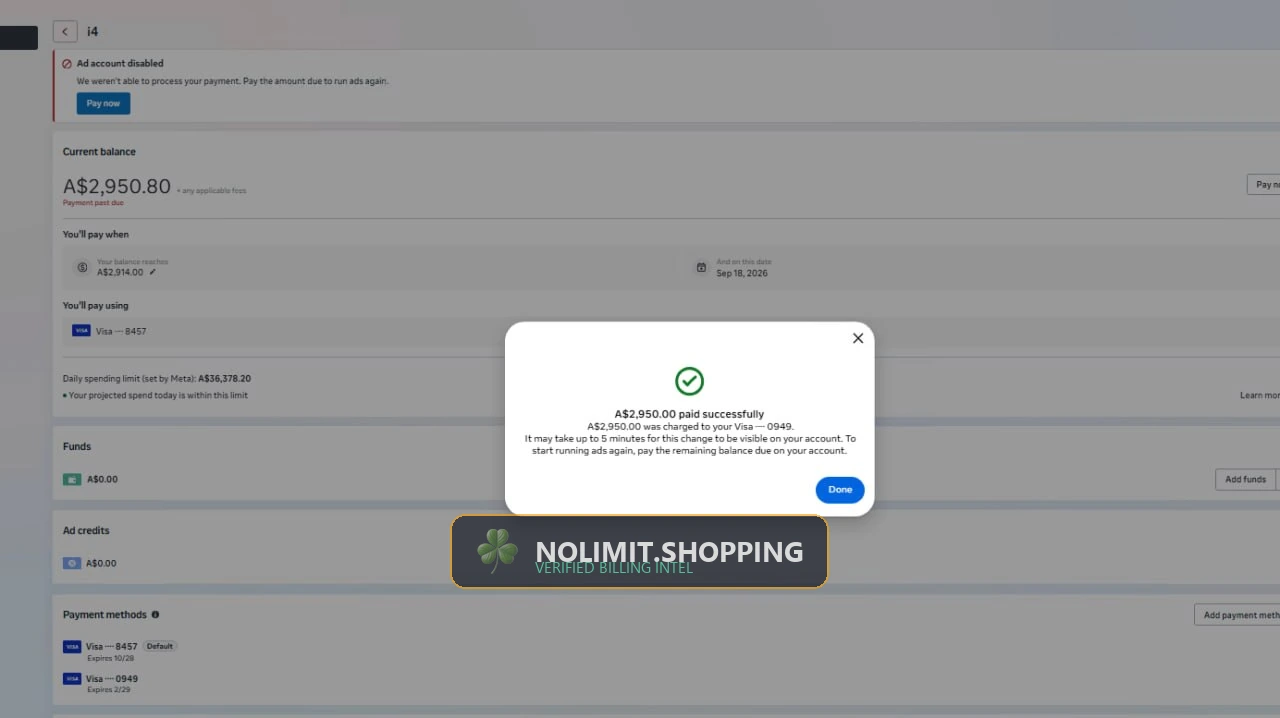
A practical calendar should include the amount, currency, counterparty, source document, expected date, confidence category, and owner for every material item. For recurring small transactions, a reconciled aggregate can be sufficient. For a large affiliate receipt or credit-facility payment, preserve the individual reference. The objective is a forecast whose largest assumptions can be challenged and updated without rebuilding the entire model.
Calculate the baseline funding requirement
With immediate media cash outflow and a fifty-day average cash conversion delay, steady spending of $20,000 per day implies approximately $1,000,000 tied up in the media-funded operating cycle. This is a simplified working-capital approximation, not a complete balance-sheet requirement. It assumes stable spend, predictable collections, and no offsetting supplier payment terms. Growth, rejection rates, seasonality, and contractual payment timing can make the actual peak requirement higher or lower.
At $10,000 daily, the same approximation is $500,000; at $50,000 daily, it is $2,500,000. A business should not extrapolate a funding model built at a small test budget into a much larger launch without recalculating it. The campaign's percentage margin can remain unchanged while the absolute amount of capital required grows rapidly. Revenue growth does not automatically supply cash before the receivable is collected.
| Daily media outflow | Effective delay | Simplified funded exposure |
|---|---|---|
| $10,000 | 35 days | $350,000 |
| $20,000 | 35 days | $700,000 |
| $20,000 | 50 days | $1,000,000 |
| $20,000 | 65 days | $1,300,000 |
| $50,000 | 50 days | $2,500,000 |
If an authorized platform payment arrangement defers some media cash outflow, model its actual due dates and capacity separately. Do not assume that a collection threshold provides thirty days of funding. TikTok documents monthly invoicing as an eligibility-based arrangement with a spending cap and states that its credit line is not intended as a general financing product. A platform spending facility should be represented according to its contract rather than treated as unrestricted working capital. [S1](https://ads.tiktok.com/help/article/about-monthly-invoicing)
Add stress reserves without counting the same exposure twice
Suppose the baseline scenario requires $1,000,000. An additional fourteen-day payout delay at $20,000 daily adds $280,000. Assume another $60,000 of distinct refund or settlement obligations and $20,000 of other near-term cash costs are not already included in the baseline. The stressed requirement becomes $1,360,000. These are illustrative inputs; the important control is documenting which obligations each reserve covers.
Do not add a reserve for rejected revenue to a forecast that has already reduced every receipt by the same expected rejection amount unless the extra reserve covers a distinct tail risk. Do not deduct pending payment holds twice if the opening available balance already excludes them. A reserve worksheet should include an overlap check, because conservative-looking double counting can distort business decisions just as much as optimistic omission.
Use multiple scenarios instead of one arbitrary percentage. A base case can use contracted timing and observed acceptance; a delay case can shift a major receipt; a quality case can reduce accepted outcomes; a combined case can apply both. Report the minimum cash balance, time below the internal liquidity floor, and size of required corrective action. Scenario inputs should be approved by finance and periodically compared with actual outcomes.
Translate conversion quality into collectible margin
Assume daily media spend of $20,000 produces $26,000 of provisional affiliate revenue. If 5% is rejected under the actual commercial validation rules, expected approved revenue is $24,700. After $1,000 of incremental operating costs, expected contribution is $3,700 per day. The provisional $6,000 media margin was not the spendable profit. Acceptance quality changed the result before any funding fees or collection delay were considered.
A 10% rejection rate reduces approved revenue to $23,400 and contribution to $2,400 under the same assumptions. That is a 35.14% decline in contribution relative to $3,700. Small percentage changes in revenue quality can have a much larger percentage effect on profit because advertising cost has already been incurred. Forecast the acceptance process at the cohort level instead of applying one permanently optimistic portfolio average.
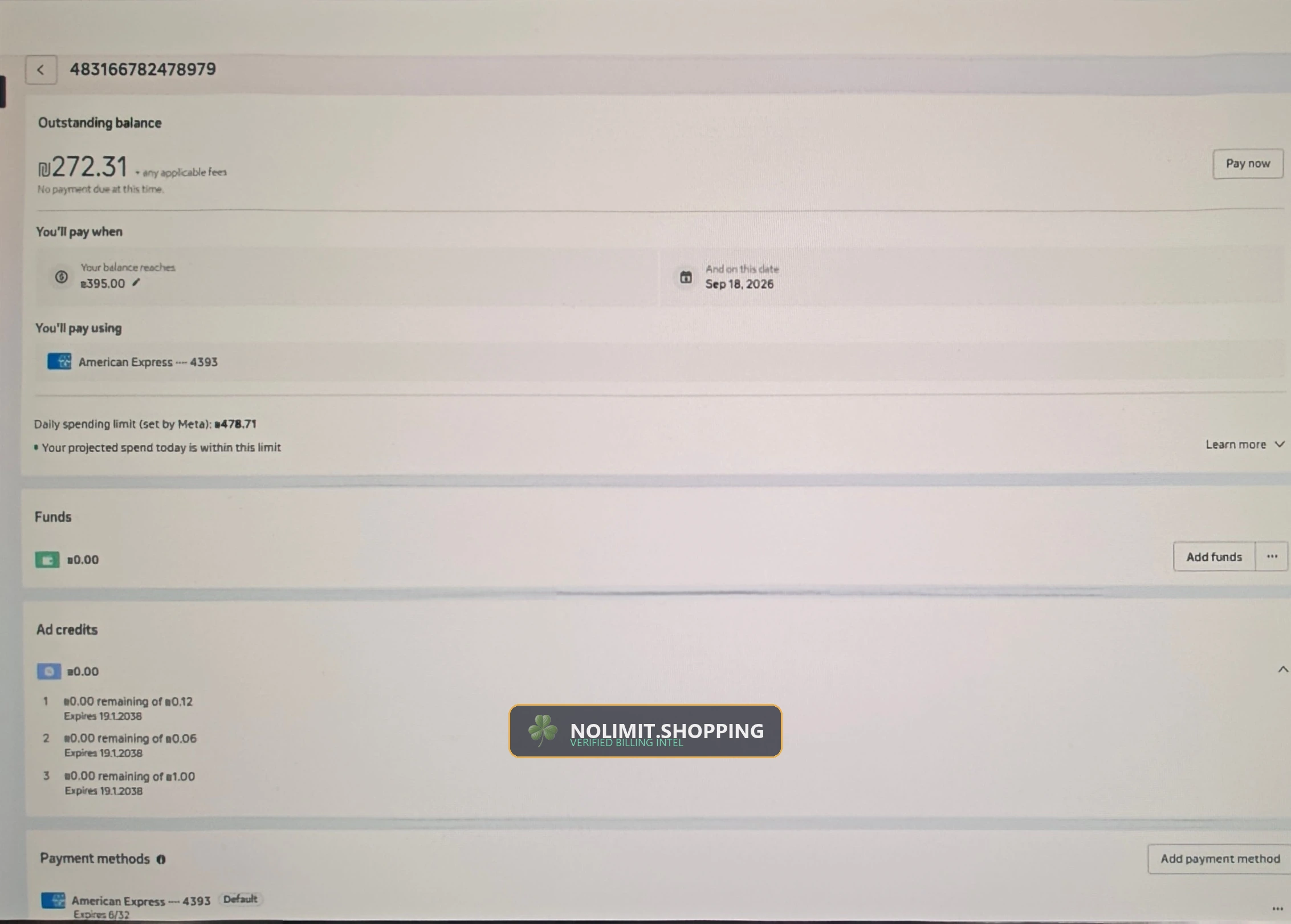
Track earned, submitted, approved, invoiced, due, received, and reconciled amounts separately. A receivable aging report should show days since the relevant contractual date and the reason for any dispute. Pending approval is different from an overdue approved invoice. When a payer changes its validation rules or holds a cohort for review, update the cash scenario immediately rather than waiting for the month-end accounting close.
Zero gateway fee does not mean zero economic cost
A payment route can have a zero stated service fee while still incurring network charges, conversion spread, withdrawal costs, funding fees, minimums, or delays before the recipient can use the money. Define the fee claim narrowly and identify who pays each component. For NoLimit Shopping, publish a zero-service-fee statement only if the current checkout terms and receipts substantiate that exact scope. No verified current fee schedule was supplied for this article.
For an illustrative $10,000 funding cycle, assume a 0.8% conversion spread, a 0.2% service charge assessed on the same base, and a $5 fixed network or withdrawal cost. Total modeled cost is $80 + $20 + $5 = $105, or 1.05%. If the service charge is waived, the total becomes $85, or 0.85%. The service fee is zero, but the full cost is not.
The route and counterparty matter. Tether's published direct acquisition and redemption schedule lists minimums and fees; it does not describe every exchange, wallet, or merchant checkout. At the time reviewed, direct redemption had a $100,000 minimum and a fee of the greater of $1,000 or 0.1%. Those terms demonstrate why a token's intended dollar reference cannot be treated as a universal free, immediate dollar-redemption promise. [S2](https://tether.to/en/fees/)
Keep token quantity, valuation, and usable liquidity separate
Record a digital-asset receipt as an exact token quantity, network, asset identifier, transaction reference, and confirmation state. Record its accounting valuation and subsequent conversion separately. A quantity of tokens and an amount of unrestricted bank cash are different assets with different availability. Do not silently treat a pending transfer as settled inventory or a token balance as immediately spendable card capacity.
For a scenario, suppose a business holds 200,000 units of a dollar-referenced token and uses a hypothetical stress valuation of $0.98 per unit. Marked value is $196,000. If only 60% can be converted into usable payment funds before tomorrow's obligations, near-term available value under that scenario is $117,600, before explicit conversion costs. This is a stress assumption, not a live market quote or a prediction about a particular token.
A liquidity factor should represent the amount genuinely usable within the relevant time horizon, not an unexplained risk discount. Document the conversion path, limits, operational hours, and evidence supporting it. A transfer that can be completed eventually may still fail to fund a payment due in the next hour. Treasury decisions should match asset availability to obligation timing rather than rely on a single total-balance figure.
Define reserve tiers by access time and ownership
A useful reserve policy separates immediate operating liquidity, short-term replenishment capacity, and strategic reserves. For the illustrative $1,360,000 stressed requirement, one possible allocation is $40,000 immediately available for the next two days, $100,000 accessible under a documented short-term replenishment plan, and $1,220,000 in the remaining approved reserve pool. The allocation totals the modeled requirement; it does not create additional capital through labels.
The tiers must also reflect who owns the funds and what obligations they may cover. Customer deposits, money earmarked for another client's campaigns, and the agency's own unrestricted cash are not interchangeable simply because they appear in one interface. Internal reserve transfers should follow the applicable contract and authorization. Do not describe pooled balances as protected escrow unless the actual legal and operational arrangement supports that claim.
For each tier, define the activation trigger, approver, maximum transfer, expected availability, and evidence of completion. A treasury owner should be able to answer how the next payment will be funded if the primary receipt arrives late. The contingency must be concrete enough to execute, but it should not depend on an unapproved loan, unverified counterparty promise, or assumed platform limit increase.
Use double-entry discipline and explicit pending states
The proposed NoLimit Shopping Proprietary Ledger should distinguish customer liabilities, agency funds, platform deposits, accrued media obligations, affiliate receivables, fees, and refunds. A balance counter that only adds deposits and subtracts orders cannot explain all of those relationships. Establish the accounting treatment with the business's finance owner, then encode the approved journal rules and retain a traceable link to each source document.
For a simple illustrative customer deposit, the internal record might increase a controlled asset and a corresponding customer liability. Later authorized use reduces that liability and records the relevant settlement according to the contractual arrangement. The precise journal depends on whether the business acts as principal, agent, reseller, or another role. This article does not determine that classification; it requires the system to preserve enough evidence for the correct treatment.
The NoLimit Shopping Proprietary ACID Engine should be specified to post related internal entries atomically and prevent duplicate recognition of the same external receipt. External finality remains separate. Use pending, confirmed, allocated, settled, and reversed states where appropriate, with explicit transitions. A callback or notification alone should not override contradictory authoritative evidence, and an uncertain outcome should not trigger a second credit to the customer.
Implement a transparent runway calculator
type CashDay = {
  receiptsMinor: bigint;
  outflowsMinor: bigint;
};

function cashPath(openingMinor: bigint, days: CashDay[]): bigint[] {
  const out: bigint[] = [];
  let balance = openingMinor;
  for (const d of days) {
    balance = balance + d.receiptsMinor - d.outflowsMinor;
    out.push(balance);
  }
  return out;
}
// Cash flow projection model for liquidity buffer management.
A proposed NoLimit Pro Tools Suite cash planner can use this calculation with redacted daily aggregates. It should show that same-day netting can conceal intraday shortages. If a major payment leaves in the morning and a receipt arrives at night, use finer intervals or conservatively sequence the outflow first. The calculator should not describe unapproved receivables or undrawn conditional facilities as cash merely to keep the projected balance positive.
The model also needs a separate restricted-funds register. A positive total bank balance is not sufficient if most of it belongs to clients or covers committed obligations outside the forecast. Reconcile opening unrestricted cash before running scenarios, and retain the date of the source balance. A precise calculation on stale or incorrectly classified input remains an unreliable funding decision.
Put spend controls ahead of a predictable liquidity shortfall
Define an internal minimum liquidity floor and a decision process for reducing future authorized spend when the forecast breaches it. The action can include holding budget increases, narrowing exploration, collecting an agreed client prepayment, or using an already approved funding arrangement. The correct response depends on contracts and the business's circumstances. The essential discipline is acting before a payment fails, while there is still time to make an orderly decision.
Calculate the marginal effect of a spend reduction rather than assume an immediate cash cure. Pausing $5,000 of daily media saves future outflows, but it does not eliminate invoices already incurred. It may also reduce future receipts and contribution. The forecast should model both effects and preserve profitable commitments where feasible. A blanket cut can improve this week's cash while unnecessarily damaging the following month's earnings.
Assign one owner to the forecast and one reviewer for material changes. Buying leads supply campaign plans, affiliate operations supplies validation and payout status, finance reconciles actual cash, and leadership approves the risk envelope. Keep an exception log when the business knowingly operates below its preferred buffer. An explicit decision with an owner and expiry is better than an unspoken assumption that the next payout will arrive early.
Reconcile evidence before promoting the funding story
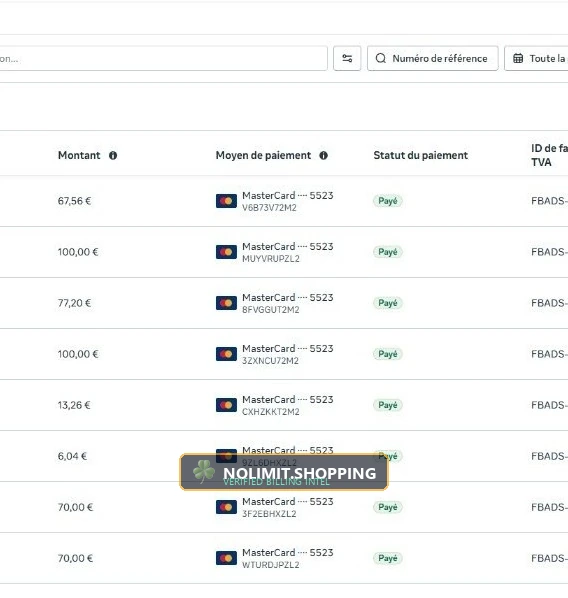
A funding case study should publish its scope and limitations as carefully as a performance case study. Identify whether figures represent gross revenue, approved revenue, received cash, or unrestricted cash. Explain timing conventions and any excluded obligations. A high-spend screenshot without the payout calendar cannot demonstrate that the operating model is adequately capitalized.
For current NoLimit Shopping commercial terms, ask the Admin Desk at @markzuckerads for the exact payment route, fee scope, settlement conditions, and evidence requirements. Enterprise buyers should evaluate the whole cash cycle: legitimate ownership of funds, cost to make them usable, time to receipt, and obligations that mature first. The durable advantage is a funded operating plan with transparent records, not an unsupported promise that rapid checkout removes working-capital risk.
Sources and evidence scope
- [S1: TikTok — About monthly invoicing](https://ads.tiktok.com/help/article/about-monthly-invoicing). Official eligibility and spending-cap description; reviewed September 23, 2026. Not a general-purpose financing commitment.
- [S2: Tether — Fees](https://tether.to/en/fees/). Direct acquisition and redemption terms reviewed September 23, 2026; these are distinct from third-party exchange or merchant-checkout fees.